

As a supplier of Magnetic Latch Mortise Locks, one of the most frequently asked questions from our customers is about the energy consumption of these locks. In this blog, we will delve into the details of how much energy a magnetic latch mortise lock consumes, exploring the factors that influence it and providing some insights for a better understanding.
Understanding Magnetic Latch Mortise Locks
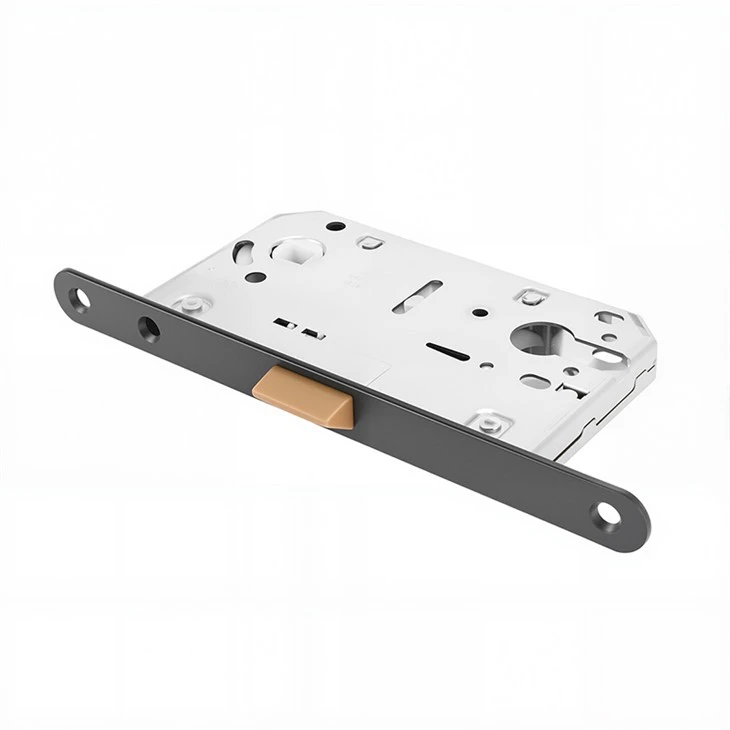
Before we discuss energy consumption, let's briefly understand what a magnetic latch mortise lock is. A magnetic latch mortise lock is a type of lock that uses magnetic force to secure a door. It is typically installed within the door frame and the door itself, providing a high - level of security and a sleek appearance. These locks are commonly used in various settings, including residential, commercial, and industrial buildings.
Our company offers a wide range of magnetic latch mortise locks, such as the Silent Magnetic Mortise Lock, Magnetic Lock Body For Interior Doors, Magnetic Mortise Lock Case, and Noiseless Magnetic Door Lock Body. You can find more details about our Magnetic Latch Mortise Lock on our website.
Factors Affecting Energy Consumption
The energy consumption of a magnetic latch mortise lock is influenced by several factors:
1. Lock Design and Technology
Different lock designs and technologies can have a significant impact on energy consumption. Some locks are designed to be more energy - efficient, using advanced magnetic materials and circuits to reduce power usage. For example, modern magnetic latch mortise locks may use low - power microcontrollers and optimized magnetic fields to minimize energy consumption while maintaining a strong locking force.
2. Locking Force
The locking force required by the lock is directly related to energy consumption. A higher locking force generally means more energy is needed to generate the magnetic field. Locks used in high - security applications, such as in banks or government buildings, may require a stronger locking force and thus consume more energy compared to locks used in residential settings.
3. Usage Frequency
The frequency of lock operation also affects energy consumption. If a lock is opened and closed frequently, it will consume more energy as the magnetic field needs to be repeatedly activated and deactivated. In contrast, a lock in a rarely used door will consume less energy over time.
4. Power Supply
The type of power supply used for the lock can influence energy consumption. Magnetic latch mortise locks can be powered by different sources, such as batteries or direct current (DC) power. Battery - powered locks need to be designed to conserve energy to extend battery life, while DC - powered locks may be more energy - efficient if the power source is well - regulated.

Measuring Energy Consumption
To measure the energy consumption of a magnetic latch mortise lock, we typically use the unit of watt - hours (Wh). The energy consumption of a lock can be calculated by multiplying the power (in watts) by the time (in hours) the lock is in operation.
Most magnetic latch mortise locks have a standby power consumption and an operating power consumption. Standby power is the power consumed when the lock is in a locked state and waiting for an activation signal. Operating power is the power consumed when the lock is being opened or closed.
For example, a typical magnetic latch mortise lock may have a standby power consumption of around 0.5 - 1 watt. When the lock is activated, the operating power consumption may increase to 5 - 10 watts for a short period, usually less than a second.
Let's assume a lock has a standby power of 0.7 watts and is in standby mode for 23 hours a day. The standby energy consumption per day would be 0.7 watts × 23 hours = 16.1 watt - hours. If the lock is activated 10 times a day, with an operating power of 8 watts for 0.5 seconds each time, the operating energy consumption per day can be calculated as follows:
First, convert the time to hours: 0.5 seconds = 0.5/3600 hours ≈ 0.000139 hours.
The energy consumption per activation is 8 watts × 0.000139 hours = 0.001112 watt - hours.
For 10 activations, the total operating energy consumption per day is 0.001112 watt - hours × 10 = 0.01112 watt - hours.
The total daily energy consumption of the lock would be the sum of the standby and operating energy consumption, which is approximately 16.1 + 0.01112 = 16.11112 watt - hours.
Energy - Saving Tips
As a supplier, we understand the importance of energy efficiency for our customers. Here are some energy - saving tips for using magnetic latch mortise locks:
1. Choose Energy - Efficient Locks
When selecting a magnetic latch mortise lock, look for models that are specifically designed to be energy - efficient. These locks often use advanced technologies and materials to reduce power consumption without sacrificing security.
2. Optimize Locking Force
Only use the locking force that is necessary for your application. If a lower locking force can provide sufficient security, choose a lock with a lower power requirement.
3. Adjust Usage Frequency
If possible, try to reduce the frequency of lock operation. For example, in a building with multiple doors, use a master key system to reduce the number of individual lock activations.
4. Use a Regulated Power Supply
For DC - powered locks, use a well - regulated power supply to ensure stable power output and reduce energy waste.
Conclusion
In conclusion, the energy consumption of a magnetic latch mortise lock depends on various factors, including lock design, locking force, usage frequency, and power supply. By understanding these factors and following the energy - saving tips, customers can effectively manage the energy consumption of their locks.
At our company, we are committed to providing high - quality and energy - efficient magnetic latch mortise locks. If you are interested in our products or have any questions about energy consumption, please feel free to contact us for a purchase negotiation. We look forward to working with you to meet your security and energy - efficiency needs.
References
- "Magnetic Lock Technology and Applications" - Industry research report
- "Energy - Efficient Lock Design Principles" - Academic journal on security and energy management