

Can a Magnetic Mortise Lock Case be used in an airport?
As a supplier of magnetic mortise lock cases, I often encounter inquiries about the suitability of our products in various environments. One question that frequently arises is whether a magnetic mortise lock case can be used in an airport. In this blog post, I will explore the feasibility of using magnetic mortise lock cases in airports, taking into account the unique security requirements, operational needs, and regulatory standards of these high - traffic and high - security facilities.
Airport Security Requirements
Airports are among the most secure facilities in the world, with multiple layers of security measures in place to protect passengers, staff, and aircraft. The security requirements for locks in airports are extremely high. They need to provide reliable access control, prevent unauthorized entry, and withstand various forms of physical and electronic attacks.
Magnetic mortise lock cases offer several features that make them suitable for airport security. Firstly, they provide a high level of security through magnetic locking technology. The magnetic force can be adjusted to ensure a strong and reliable lock, preventing the door from being forced open easily. Secondly, these locks can be integrated with access control systems, allowing for seamless management of who can enter different areas of the airport. For example, airport staff can be given access to specific zones based on their job requirements, and the access can be easily revoked if necessary.
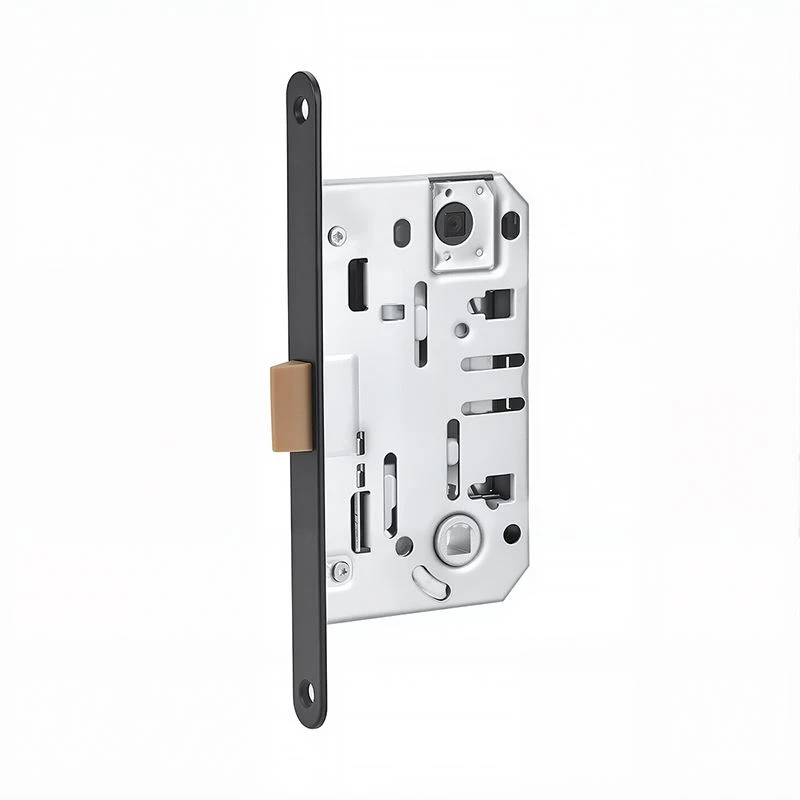
The Magnetic Mortise Lock Case we supply is designed with advanced security features. It has a robust construction that can resist tampering and vandalism. The lock mechanism is protected by a high - strength case, which adds an extra layer of security. Additionally, the magnetic lock can be connected to an alarm system, so that any unauthorized attempt to open the door will trigger an alert.
Operational Needs in Airports
Airports are busy places with a constant flow of people and goods. Locks in airports need to be easy to operate and maintain. Magnetic mortise lock cases are well - suited for these operational needs.
They are relatively quiet in operation. The Noiseless Magnetic Door Lock Body is an excellent example. In an airport environment, where noise can be a major distraction, a quiet - operating lock is essential. It won't disrupt the normal operations or cause discomfort to passengers and staff.
Moreover, magnetic mortise lock cases are easy to install. They can be retrofitted into existing doors without major modifications, which is a significant advantage in an airport where renovations need to be carried out with minimal disruption. The installation process is straightforward, and our technical support team can provide detailed guidance to ensure a smooth installation.
In terms of maintenance, magnetic mortise lock cases are designed for long - term use with minimal upkeep. The magnetic components are durable and do not require frequent replacement. Regular inspections and simple cleaning are usually sufficient to keep the locks in good working condition.
Regulatory Standards in Airports
Airports are subject to strict regulatory standards set by national and international authorities. These standards cover various aspects of security, including the use of locks.
Magnetic mortise lock cases need to meet specific safety and security standards. For example, they should be fire - resistant to ensure that in case of a fire, the doors can remain locked and prevent the spread of fire and smoke. Our Magnetic Mortise Lock Body is designed to meet these fire - safety requirements.
They also need to comply with electrical safety standards. Since magnetic locks rely on electricity to operate, they must be designed and installed in a way that ensures safe electrical usage. Our products are tested and certified to meet the relevant electrical safety regulations.
Challenges and Considerations
While magnetic mortise lock cases have many advantages for airport use, there are also some challenges and considerations.
One challenge is power supply. Airports need to ensure a reliable power supply to the locks at all times. In the event of a power outage, the locks should have a backup power source or a fail - safe mechanism. Our locks can be equipped with battery backups to ensure continuous operation during power outages.
Another consideration is the electromagnetic interference (EMI) in an airport environment. There are many electronic devices in an airport, and the magnetic locks need to be designed to be immune to EMI. Our engineers have taken this into account during the design process, and our magnetic mortise lock cases are tested to ensure they can operate properly in an EMI - rich environment.
Product Recommendations
We offer a range of magnetic mortise lock cases suitable for airport use. The Silent Magnetic Mortise Lock is ideal for areas where noise is a concern, such as boarding gates and lounges. It provides a high level of security while operating quietly.
The Magnetic Latch Mortise Lock is another great option. It has a unique latching mechanism that provides additional security and is easy to operate. This lock is suitable for areas where frequent access is required, such as staff corridors and storage rooms.
Conclusion
In conclusion, a magnetic mortise lock case can indeed be used in an airport. It meets the high - level security requirements, operational needs, and regulatory standards of airports. With proper design, installation, and maintenance, magnetic mortise lock cases can provide a reliable and efficient access control solution for airports.

If you are an airport operator or a procurement professional responsible for security equipment in an airport, and you are interested in our magnetic mortise lock cases, we invite you to contact us for further discussion. We can provide detailed product information, technical support, and customized solutions to meet your specific needs.
References
- Airport Security Guidelines, International Civil Aviation Organization (ICAO).
- Electrical Safety Standards for Airport Equipment, National Electrical Code (NEC).
- Fire - Safety Regulations for Airport Buildings, Local Fire Departments.